

Online exam prep

Ready to get started?

Up-to-date official questions, smart learning, practice tests just like the real exam and an AI helper always at hand. All in several languages. Pass on your first try with us.

LICENCE
GET READY FOR THE EXAM

Incredibly helpful test prep tool

This service was incredibly helpful to prepare for the driving theory test. It was easy to use, the translations were accurate, and it included all of the questions from the actual exam. The electronic format was just like the actual theory test as well. It helped me pass the test with 100% accuracy!

David Evans Jan 2022
Some feedback

I experienced a very quick response to a query and assistance to resolve. In addition, some of my sample test questions came up in the actually theory test which proved very useful. Overall though, excellent customer service and the tool functioned very well.

customer Apr 2022

Profesionál driving licence

Yes, very helpful for me and i have already my driving license here in Czech Republic ..thanks a lot 😊😊😊

Maruska Jan 2022

The registration took a few attempts

The registration took a few attempts. Otherwise, everything went smoothly. In the end, the same questions appeared in the test, so I was well prepared.

Uri Gankin Jan 2022

Nice to practice

Nice to practice, thanks

Regina Nov 2022

Algorithm that chooses the questions could be better

The questions and answers are reliable. The only problem is, the algorithm that chooses questions for each test is not great. The tests are simpler than they should be. One has to take more tests to go through more questions, as the algorithm does not add new questions regularly enough. Having said that, this is still invaluable for anyone who needs to study theory in English.

RS May 2023
What you’ll find in the app

Everything you need

Tools that will get you to your exam.

AI helper

Don’t understand a question or a rule? Ask Elko.

Smart learning

A highly effective way to learn with flashcards and spaced repetition.

Official test simulation

A simulation of the final test, time limit included.

Targeted tests

Practise exactly the topic you’re interested in, or the questions you struggle with.

Answer explanations

Most questions come with an explanation that tells you in plain words why that answer is the right one.

Detailed progress overview

Your practice test history and an overall picture of how ready you are for the final exam.

Listening to Questions and Answers

Have the texts read aloud. Ideal for those who memorize better by listening.

Always up-to-date questions

The questions are based on materials from the Czech Ministry of Transport and are updated regularly.

Multilingual support

The app supports several languages. For every translated question you can also show the Czech wording you’ll see at the exam.

Search

Advanced question search by keyword.

Notes

Write your own notes on questions to help you remember them more easily.

Colour scheme

Choose dark or light mode in the app.

A taste

What awaits you in the app

Try it right now, no sign-up needed.

Exam simulation

Try an exam-style test where you need to answer 25 questions within 30 minutes and score at least 43 out of 50 points.

B Question 1 of 25
30:00
06040297

Driver exiting a roundabout:

He is obliged to signal a change of direction to the right.
He is not obliged to signal a change of direction.
He shall warn other road users of his intention by means of a warning light.
06060393

The lane into which the driver of a vehicle intends to cross out of view is called:

Connecting lane.
Turning lane.
Continuous bar.
06060398

If a merge lane is provided for merging into the through lane:

Is the driver obliged to use the connecting lane before entering the passing lane.
The driver does not have to use it before moving into the passing lane, as long as he does not restrict or endanger other drivers by moving into the passing lane.
Is the driver required to reach a speed of at least 80 km/h before moving into the passing lane.
06040278

By switching on a warning light, the driver gives notice if:

It is necessary to suddenly reduce driving speed or stop the vehicle.
The driver in front of the vehicle is driving slowly and holding up traffic on the road.
He is overtaking a motorcade which is slowing him down.
06050157

The driver of a motor vehicle with a maximum permissible weight not exceeding 3 500 kg and a bus may drive:

On a road for motor vehicles and on a motorway at a maximum speed of 130 km.h-1.
On the road for motor vehicles at a maximum speed of 110 km.h-1 and on the motorway at a maximum speed of 130 km.h-1.
On the road for motor vehicles at a speed of not more than 110 km.h-1 and on the motorway at a speed of not more than 130 km.h-1, except for the driver of a bus, who may drive at a speed of not more than 110 km.h-1 on the motorway.
06040251

After overtaking another vehicle, you intend to move in front of that vehicle. Do you need to signal a change of direction?

Yes.
No.
06040268

The driver must not exceed:

The maximum authorised speed of the vehicle and, in the case of a combination, the maximum authorised speed of any vehicle in the combination.
The top speed of the vehicle and, if it is a combination vehicle, the top speed of the trailer need not be taken into account.
The maximum authorised speed of the vehicle and, in the case of a combination, the maximum authorised speed of the trailer only.
06060049

If drivers of oncoming vehicles turn left:

They are avoiding on the left (their vehicles are passing on the right side).
They are avoiding on the right (their vehicles are passing on the left side).
Avoid right and left in the intersection as circumstances and space permit.
06040308

The driver of another vehicle must follow a public passenger transport vehicle that has stopped at a bus stop in a municipality without a boarding island or without a platform on a raised tram lane:

Reduce the speed of the vehicle to take into account the safety of passengers entering and exiting the vehicle.
The vehicle shall stop; if there are several public passenger transport vehicles at the stop, it shall stop behind the second of them, and shall only resume driving if it no longer endangers passengers who are getting on or off.
Stop the vehicle even if a public passenger transport vehicle stops at the edge of the road.
06060392

The connecting lane is:

Lane reserved for public passenger transport vehicles only.
A lane designated for slow vehicles that cannot reach an instantaneous speed of at least 60 km/h on a given section.
A lane intended for placing vehicles in the through lane.
16010009

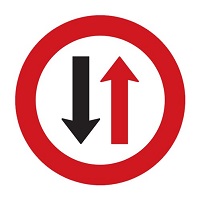
Which of the pictured traffic signs does not govern the right of way.

06050074

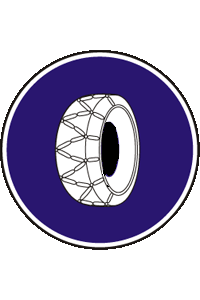
Traffic sign shown:

06050074
It requires the driver of a motor vehicle with three or more wheels to continue driving only after snow chains have been fitted to at least two driving wheels.
It recommends that the driver of a motor vehicle with three or more wheels should continue driving only after snow chains have been fitted.
Prohibits entry of vehicles with snow chains on.
16010008

Which of the pictured traffic signs does not govern the right of way.

08120033

Do you have to be careful if you want to use a vehicle you are driving for the first time?

Yes. The controls and dimensions of the vehicle may be unusual for you.
Yes. Only if the vehicle runs on a different type of fuel.
No. Every vehicle is handled the same way.
08120034

Can skidding cause a vehicle to go around a curve?

Light weight of the vehicle.
Defective vehicle suspension damper.
Reduced visibility.
06050517

There is an increased risk of loss of tyre grip and subsequent skidding in rain:

In a section with ruts.
On lower class roads.
On a road with a concrete surface.
08120032

Do you need to be careful if you are driving a vehicle you are not familiar with for the first time?

Yes. You don't know how the vehicle reacts when braking, for example.
Yes. Only if the vehicle is fuelled by a different type of fuel.
No. Every vehicle is handled the same way.
06050306

In the situation depicted, you are the driver of the vehicle from the viewpoint. How will you behave?

I will give way to the vehicle coming from the right.
I'll go through the intersection first.
I have to turn right.
06050525

You are the driver of the vehicle from the view. In what order will the vehicles pass through this intersection?

1. the red truck, 2. your vehicle together with the oncoming blue vehicle.
1. your vehicle together with the oncoming blue truck, 2. the red truck.
1. your vehicle, 2. the red truck, 3. the oncoming blue vehicle.
06060047

You are the driver of the vehicle from the view. Determine the order in which the vehicles will pass through this intersection:

1. your vehicle, 2. oncoming blue vehicle, 3. green vehicle coming from the right.
1. your vehicle at the same time as the green vehicle coming from the right, 2. the oncoming blue vehicle.
1. oncoming blue vehicle, 2. your vehicle at the same time as a green vehicle coming from the right.
06060251

A historic vehicle is:

A vehicle which is registered in the register of historic and sports vehicles and which has been issued with a historic vehicle licence.
A vehicle which may not be used for road traffic.
Any vehicle whose design does not comply with the technical requirements for newly manufactured vehicles.
06060265

The operator of a passenger car which has not been previously registered abroad shall deliver the car for technical inspection no later than the deadline:

4 years after the first registration of this car and periodically thereafter within 2 years.
4 years after the first registration of this car and periodically thereafter within 4 years.
2 years after the first registration of this car and periodically thereafter within 4 years.
06060032

The withdrawal of the driving licence is obligatory for the holder of the driving licence:

Report immediately to the relevant municipal authority of the municipality with extended jurisdiction.
Report immediately to the relevant traffic police department.
Report immediately to the relevant municipal police department.
06060044

If a driving licence is lost, stolen, damaged or destroyed, the holder of the licence must:

Report immediately to the relevant municipal authority of the municipality with extended jurisdiction.
Report immediately to the relevant traffic police department.
Report immediately to the relevant municipal police department.
11020006

In the event of an accident with injuries, we call first:

Firefighter (150)
policii (158)
Emergency services (155)

To see the test result, you need to log in.

Sign flashcards

Do you know this sign? If so, great! If you’re not sure, click it to see the right answer.

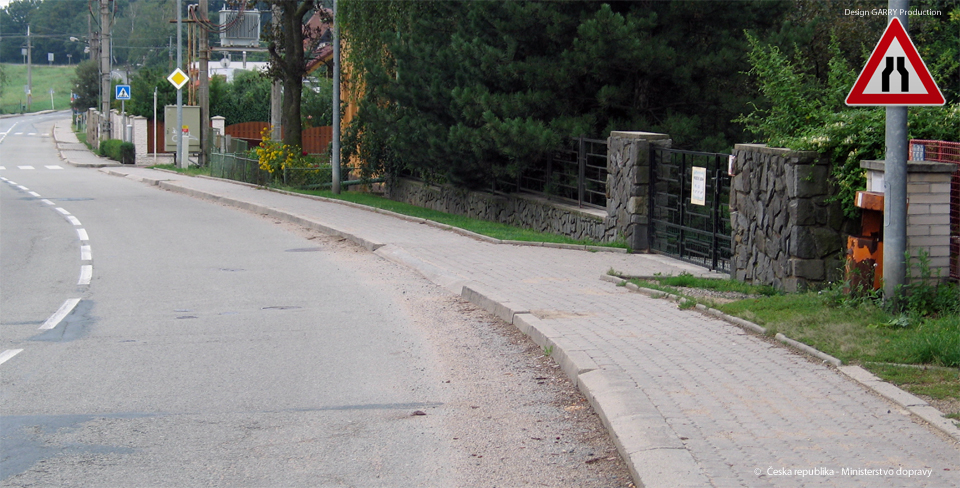
How do you behave in a place with this warning sign?

Correct answer

I will adapt my driving to the fact that the roadway narrows considerably compared to the previous section, on both sides

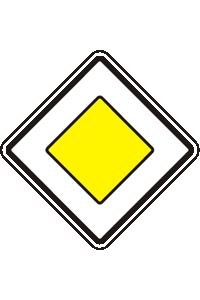
This road sign indicates:

Correct answer

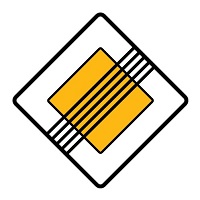
Main road

Traffic sign shown:

Correct answer

It requires the driver of a motor vehicle with three or more wheels to continue driving only after snow chains have been fitted to at least two driving wheels.

This tag highlights:

Correct answer

A place where the roadway narrows significantly from the previous section on both sides.

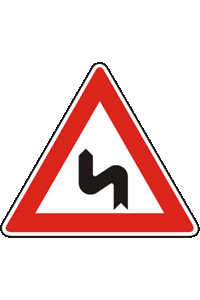
This traffic sign:

Correct answer

It points out two or more successive bends (directional curves), the first of which is to the left, which require a significant reduction in driving speed to pass safely.

This traffic warning sign:

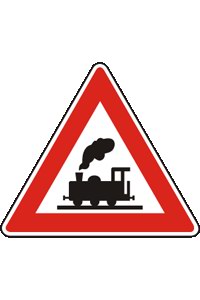
Correct answer

It warns the driver of a level crossing not equipped with barriers.

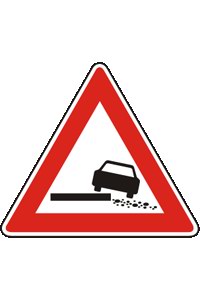
This warning sign warns drivers:

Correct answer

On a stretch of road where it is dangerous to drive on the shoulder.

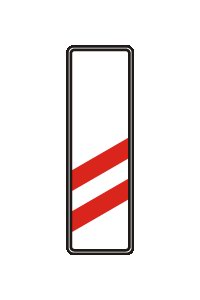
This traffic sign:

Correct answer

It is placed at a distance of 160 m in front of the level crossing to which it draws attention.

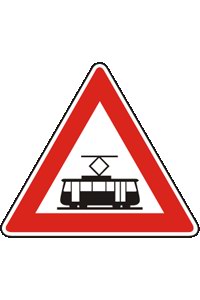
This traffic sign:

Correct answer

It draws attention in particular to the point where the tram crosses the direction of travel of other vehicles.

This traffic sign:

Correct answer

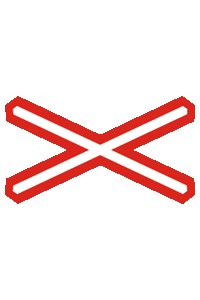
It draws attention to a single-track level crossing. If a driver is obliged to stop his vehicle before a level crossing, he shall stop in front of this sign.

This traffic sign:

Correct answer

It is valid only for the nearest intersection.

Behind the nearest vertical traffic sign as the driver of the vehicle in view:

Correct answer

You have the right of way over oncoming vehicles.

In the section after this traffic sign:

Correct answer

The driver is allowed to drive at a maximum speed of 20 km/h.

In the section after this traffic sign:

Correct answer

A driver may stop only in places marked as parking lots; however, he may stop outside parking lots.

In the section after this traffic sign:

Correct answer

The driver must take extra care to avoid endangering pedestrians.

Behind the pictured pair of road signs:

Correct answer

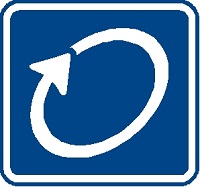
The driver will be entering a roundabout; he must give way to vehicles travelling on the roundabout.

If as a driver you see this symbol on the road, you must:

Correct answer

Adjust your driving to the fact that you are approaching a pedestrian crossing.

In the situation shown in the picture, the driver must take into account that:

Correct answer

A pedestrian crossing is warned in advance by a traffic sign, which will be followed at a distance of 150 m.

Behind this road sign:

Correct answer

The driver may stop for the time necessary to immediately take on or alight the persons being transported or to immediately load or deposit the load; however, he may not stand there.

Behind this road sign:

Correct answer

It is forbidden for a driver to drive at a speed of more than 30 km/h.

In the illustrated situation:

Correct answer

Must the driver adjust his driving with the assumption that he will reduce his speed over the horizon or stop before a pedestrian crossing.

Is it possible to stop at the nearest traffic sign in order to get out of the vehicle without delay?

Correct answer

Yes.

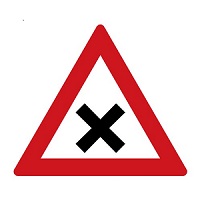
Which of the pictured traffic signs does not govern the right of way.

Correct answer

Which of the pictured traffic signs does not govern the right of way.

Correct answer

Which of the pictured traffic signs does not govern the right of way.

Correct answer

Browsing questions

Use the arrows to browse real exam questions. The correct answer is highlighted in green, with an explanation of why underneath.

06040174

In the view from the motor vehicle you see children playing on the pavement. How will you behave?

Why this is correct

Children are playing and may unexpectedly run into the road without looking. Therefore you must be ready to brake and, depending on the situation, reduce your speed in time so that you can stop. Relying on the children staying on the pavement, or startling them with the horn, is not a safe solution.
06050434

What is meant by active vehicle safety?

Why this is correct

Active safety is the set of vehicle properties that minimise the causes of a traffic accident – that is, they help to prevent the accident. These include, for example, good brakes, good visibility or stable steering. Minimising damage during or after an accident, by contrast, is the task of passive safety.
06050435

What is meant by passive vehicle safety?

Why this is correct

Passive safety is the set of vehicle properties that minimise damage in the course of a traffic accident, once it happens. These include, for example, airbags, seat belts or crumple zones. Minimising the causes of an accident, by contrast, is the task of active safety.
06050436

Passive safety features include:

Why this is correct

Among the elements of passive safety are the restraint systems, that is, seat belts and airbags, which protect the occupants at the very moment of the accident. An effective braking system and aerodynamic stability, by contrast, help to prevent an accident and therefore belong to active safety.
06050437

Airbags:

Why this is correct

Airbags fulfil their protective function only together with properly used restraint systems, that is, mainly with fastened seat belts. Without a belt the body could move in the wrong direction and the airbag could actually cause injury. They therefore do not replace seat belts and are not related to ABS.
06050440

Active safety features include:

Why this is correct

Among the elements of active safety is good visibility from the vehicle, because it helps the driver to recognise danger in time and prevent an accident. The airbag and a deformable front, by contrast, act only during an accident and are therefore elements of passive safety.
06050468

If the turn signal light is flashing significantly faster than usual, it may be causing:

Why this is correct

When the turn-signal indicator flashes noticeably faster than usual, it usually signals a faulty (burnt-out) bulb in one of the indicators. In this way the system warns the driver that one bulb is not lighting up. It has nothing to do with the switch or the starter.
06050476

Can the ability to drive be affected after consuming a small amount of alcohol, e.g. half a litre of ten-degree beer?

Why this is correct

Yes, even a small amount of alcohol, for example half a litre of weak beer, reduces the ability to drive safely – it impairs attention, reactions and judgement of distance. Black coffee or anything else will not remove the effect of alcohol. Therefore do not drink alcohol before driving.
06050499

On the motorway you have to take into account strong crosswinds in particular:

Why this is correct

On the motorway you must reckon with strong crosswind especially on bridges, where there is no surrounding built-up area or vegetation to dampen the wind. A sudden gust there can push the vehicle sideways. So on bridges hold the wheel firmly and slow down slightly if needed.
06050501

On the motorway you have to take into account strong crosswinds in particular:

Why this is correct

Strong crosswind also threatens you on the motorway in open terrain, where nothing shields the road from gusts coming across the open landscape. There the wind can push the car off its line. So in open stretches increase your attention and hold the wheel firmly.
06050504

The minimum safe distance between consecutive vehicles is generally considered to be:

Why this is correct

The minimum safe distance between vehicles travelling one behind another is usually taken to be a time gap of two seconds. In that time you can react and stop if the vehicle in front suddenly slows down. Shorter gaps (three quarters of a second) are dangerous, while a longer one is an unnecessarily large estimate.
06050517

There is an increased risk of loss of tyre grip and subsequent skidding in rain:

Why this is correct

An increased risk of loss of grip and a skid in rain arises on a section with worn ruts, where water collects and aquaplaning threatens. The water in the ruts lifts the tyre, which loses contact with the road. So slow down in places with worn ruts when it is raining.
06050522

You will be dealing with an oversteering skid in a rear-wheel drive vehicle with a manual transmission:

Why this is correct

In oversteer (a rear-wheel-drive car) the rear of the vehicle slides outward in the bend. You press the clutch, which cuts the drive to the rear wheels, and steer the wheel in the direction the rear is sliding – this corrects the skid. Adding throttle or pressing the brake would instead make the skid worse.
06050523

The adhesion between the tyre and the road surface depends on:

Why this is correct

The grip between tyre and road depends on correct tyre pressure, on tread depth and on the type and condition of the road surface. All three factors decide how well the tyre holds and how long the braking distance will be. Claiming that the type of surface has no effect is therefore wrong.
06060154

If you increase your driving speed to double (e.g. from 50 km/h to 100 km/h), this will increase the braking distance of your vehicle on dry roads:

Why this is correct

Braking distance grows with the square of the speed, so when doubling the speed (from 50 to 100 km/h) it lengthens on a dry road to roughly four times the original length. Speed therefore increases the risk far from proportionally, but much more steeply. Always keep a sufficient gap.
06060275

The cause of aquaplaning is:

Why this is correct

Aquaplaning occurs when driving fast on a road covered with a larger amount of water, when the tyre cannot drain the water away in time and starts to slide on the water layer. The vehicle then loses grip, and steering and brakes stop working. The prevention is reducing speed and having good tyre tread.
06060278

The correct tyre inflation pressure is determined by:

Why this is correct

The correct tyre inflation pressure is measured on cold tyres, not warmed up by driving. Driving heats the air in the tyre and the pressure rises, so the measured value would not match the specification. So check the pressure before driving or after a longer stop.
06060293

Snow, ice or slush on the road require:

Why this is correct

Snow, ice or slush on the road require driving with increased caution adapted to the state of the road – that is, lower speed, greater distance and smooth control. Grip is markedly reduced. Braking with the parking brake or loading the vehicle to the maximum is certainly not a solution.
06060294

A whirlwind or impact caused by overtaking:

Why this is correct

The air vortex or blast created during overtaking endangers the stability of the vehicles being overtaken, especially single-track ones such as motorcycles or bicycles. The airflow can push them sideways. So when overtaking keep a sufficient lateral distance.
06060424

What can cause a vehicle to skid when cornering?

Why this is correct

A skid when going through a bend can be caused by low tyre pressure, because a soft tyre deforms, holds the line worse and loses grip. Driving near the centre line or insufficient speed do not cause a skid in a bend.
06060425

What can cause a vehicle to skid when cornering?

Why this is correct

A skid in a bend can be caused by large differences in the inflation of individual tyres, because the wheels then do not grip equally and the vehicle behaves in an unbalanced way. The grip differs at each wheel and the vehicle more easily breaks away in the bend. A low mass of the vehicle or load is not this cause.
06060463

Can a driver read a map while driving?

Why this is correct

You must not read a map while driving, because it robs you of your view and attention and sharply increases the risk of an accident. The law requires you to devote yourself fully to driving and to watch the traffic situation (Section 5(1)(b) of Act No. 361/2000 Coll. (Czech Road Traffic Act)). There is no exception for low speed or for roads other than motorways – stop in a safe place to use the map.
08120032

Do you need to be careful if you are driving a vehicle you are not familiar with for the first time?

Why this is correct

Yes, you must also be careful when driving an unfamiliar vehicle for the first time. You do not know how it reacts, for example, when braking, how sensitive the steering is or what its dimensions are. It is certainly not true that every vehicle handles the same.
08120033

Do you have to be careful if you want to use a vehicle you are driving for the first time?

Why this is correct

Yes, you must be careful when driving a vehicle for the first time. Its controls, dimensions and behaviour may be unfamiliar to you, so its reactions may not be exactly what you expect. It is not true that every vehicle handles the same, nor that it is only about the fuel type.
08120034

Can skidding cause a vehicle to go around a curve?

Why this is correct

A skid when going through a bend can be caused by a faulty shock absorber, because the wheel then does not press against the road properly and loses grip, especially over bumps. A low mass of the vehicle or reduced visibility do not directly cause a skid.
1/25

Elko, the AI assistant

Elko answers questions about the traffic rules and points you to the relevant section of the law. Tap one of the questions to see how it answers.

Elko AI assistant
Hi, I’m Elko, your AI assistant! Ask about the rules, signs or anything from the tests.
Once you sign in, you can ask your own questions too.
Price overview

Package pricing

Unlock every feature.

7 days
99 Kč
≈ 14 Kč / day
30 days
249 Kč
≈ 8 Kč / day
Best value
90 days
399 Kč
≈ 4 Kč / day
What you unlock
  • All questionsYou'll practice questions without limits.
  • Bilingual questionsYou see each question in Czech and in your language. You'll learn the wording used in the exam.
  • AI assistant ElkoAsk about anything. Up to 25 questions a day.
  • Answer explanationsYou'll understand the rule instead of memorizing it.
  • Related questionsYou'll see more questions related to the same rule.
  • Your own notesAdd your own hint or shortcut to a question.